Everything you need to know about Australia's biggest grocery chains — prices, unique products, store counts, and honest comparisons.
From the mighty Woolies duopoly to the family-run champion of fresh produce — here's what each chain truly offers.
| Feature | Woolworths | Coles | ALDI | IGA | Harris Farm |
|---|---|---|---|---|---|
| Loyalty Program | ✔ Everyday Rewards | ✔ Flybuys | ✘ None | ✘ Varies | ✔ Friend of Farm |
| Online Delivery | ✔ Yes | ✔ Yes | ✔ Limited | ✔ Some stores | ✔ Amazon |
| Cheapest Basket | — | — | ✔ Winner | — | — |
| Best Fresh Produce | — | — | — | — | ✔ Rated #1 |
| Local Products | Some | Some | Minimal | ✔ Strong | ✔ Strong |
| Imperfect Produce | ✔ Odd Bunch | ✔ I'm Perfect | ✘ | ✘ | ✔ Imperfect Picks |
| Private Label | ✔ Extensive | ✔ Extensive | ✔ Dominant | Some | Minimal |
| Regional/Rural Stores | ✔ Widespread | ✔ Widespread | Urban focus | ✔ Best coverage | NSW/QLD only |
Australia's #1 grocery retailer since 1924 — 37% market share and growing
Founded in 1924 in Sydney, Woolworths has grown into Australia's largest supermarket chain, operating over 1,135 stores across every state and territory. It is part of the broader Woolworths Group, which also includes Big W, and employs over 200,000 Australians — making it one of the country's largest private sector employers.
Woolworths holds approximately 37% of the Australian grocery retail market, making it the undisputed market leader. Its stores are typically large-format, stocking over 20,000 individual products including fresh produce, deli items, bakery, meat, household goods, and a wide range of health and beauty products.
Woolworths sits in the mid-range pricing bracket. In CHOICE's December 2025 basket survey, a standard 17-item shop cost $89.08 at Woolworths — slightly cheaper than Coles but notably more expensive than ALDI. Weekly specials, "Prices Dropped" campaigns, and the Everyday Rewards program can meaningfully reduce your weekly bill.
Woolworths has faced scrutiny from the ACCC over price gouging concerns, alongside Coles, though the company has pledged to focus on long-term price certainty rather than temporary specials.
Woolworths' own "Macro Wholefoods" range covers organic and health-focused products at reasonable price points. Their "Odd Bunch" line sells cosmetically imperfect fruit and vegetables at a significant discount — great for budget-conscious shoppers who don't mind a wonky carrot. The store also stocks an impressive selection of Australian-made products, with dedicated sections for local brands in many stores.
The Everyday Rewards program is rated Australia's best loyalty scheme by consumer surveys. Members earn points on every dollar spent and can redeem them for Woolworths dollars or transfer to Qantas Frequent Flyer points — the only supermarket loyalty program in Australia to offer this.
A century of feeding Australia — 865 stores, Flybuys rewards, and top-rated delivery
Coles has been part of Australian life since 1914 — making it one of the oldest supermarket chains on the continent. Today, the Coles Group operates 865 supermarkets across Australia, holding roughly 27% of the grocery market and sitting firmly as the number-two player behind Woolworths.
Together, Woolworths and Coles account for around 65% of all grocery spending in Australia — a duopoly that has attracted significant regulatory scrutiny. Despite this, Coles has maintained a strong reputation for value, with weekly specials and private-label products that often undercut branded equivalents by 30–50%.
Coles and Woolworths are remarkably closely matched on price. In CHOICE's December 2025 basket survey, Coles came in at $90.09 for a 17-item basket — just $1 more than Woolworths. The supermarket runs regular seasonal price drops (recently slashing prices on 300+ winter staples) and offers a strong private-label range that delivers significant savings for shoppers willing to go off-brand.
Coles' exclusive ranges are a genuine point of difference. The Nature's Kitchen plant-based line caters to the growing vegan and vegetarian market. The I'm Free From range covers gluten-free products across dozens of categories. Their I'm Perfect imperfect produce range sells slightly misshapen fruit and veg at a discount — great for reducing food waste.
Coles' butchery and seafood departments are well-regarded, with many stores featuring a full-service deli and dedicated sushi counter in larger locations.
Coles was rated Australia's top supermarket for grocery delivery in Finder's 2025 awards. The chain has partnered with Ocado to build automated distribution centres, and offers delivery via its own app as well as through Uber Eats for rapid 1-hour delivery in major cities.
Germany's discount king — consistently Australia's cheapest weekly basket since 2001
ALDI opened its first Australian store in Sydney in 2001, and has since grown to over 602 locations — primarily in NSW, Victoria, Queensland, Western Australia, South Australia, and the ACT. Founded by brothers Karl and Theo Albrecht in Germany in 1946, ALDI's model is built on ruthless efficiency: fewer SKUs, mostly private label, minimal store décor, and savings passed directly to shoppers.
ALDI has fundamentally changed Australia's grocery landscape. Its entry into new suburbs consistently puts downward pricing pressure on nearby Woolworths and Coles stores, and it now holds approximately 10% of the Australian grocery market — up from near zero two decades ago.
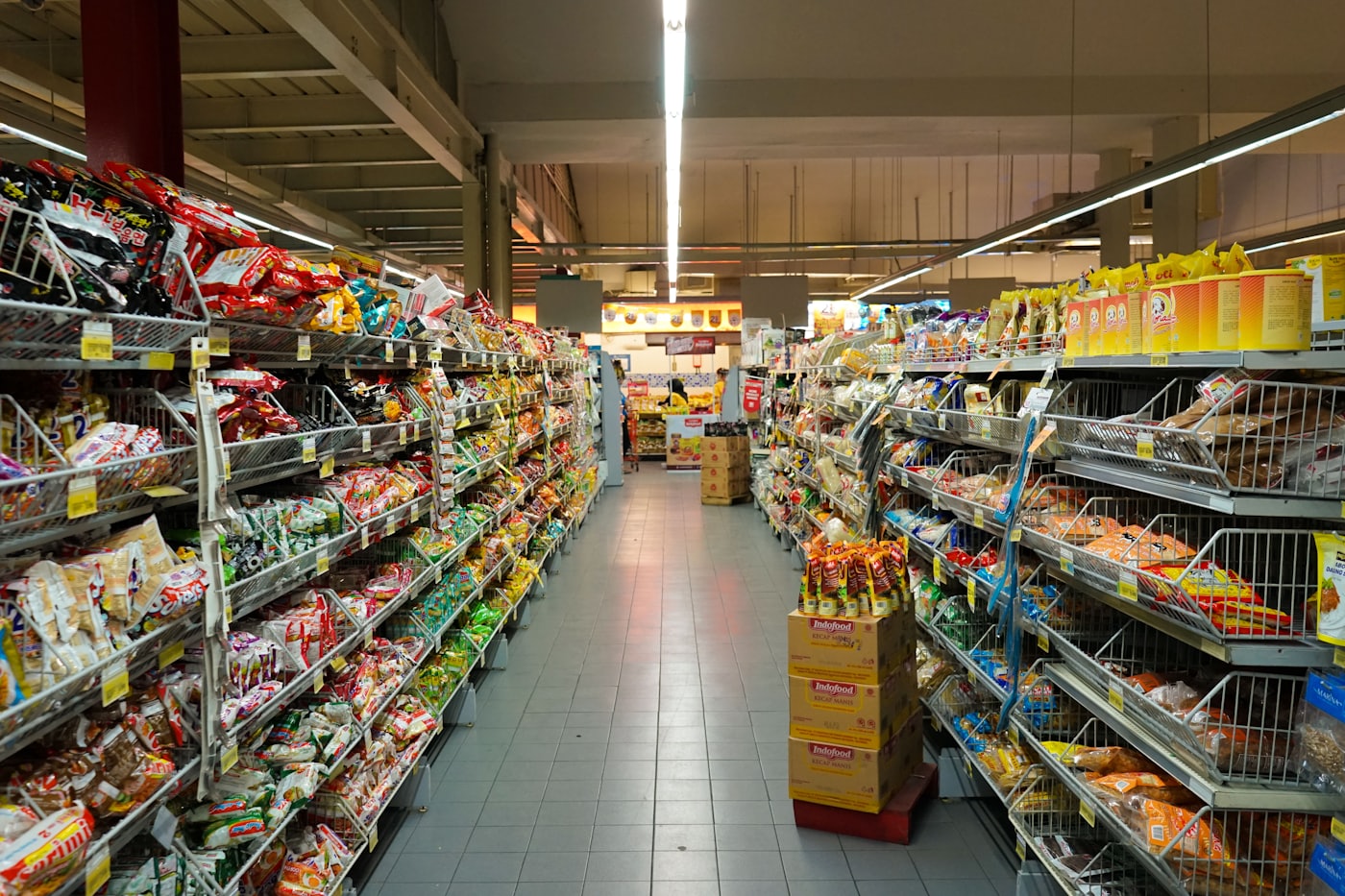
ALDI achieves its low prices through a deliberately limited range (around 1,800 products vs 20,000+ at Woolworths), heavy reliance on private-label goods, efficient supply chains, and no loyalty program (which eliminates significant administrative overhead). CHOICE's quarterly basket surveys have consistently found ALDI to be $13–15 cheaper per shop than Coles or Woolworths on equivalent items.
ALDI's most famous feature is its weekly "Special Buys" aisle — a rotating selection of non-food items (tools, cookware, sporting equipment, seasonal specials) at dramatically low prices. These items are available in extremely limited quantities and sell out fast, creating an almost cult-like following among bargain hunters.
ALDI's own private-label food products — including its Earth Grown plant-based range, Simply Nature organic line, and Specially Selected premium tier — consistently win blind taste tests against branded competitors at half the price.
ALDI does not carry most name-brand Australian products, so loyal fans of specific brands will need to supplement their shop elsewhere. Its urban-focused footprint also means it's less accessible in regional and rural Australia. And unlike Woolworths and Coles, ALDI offers no loyalty program.
Locally owned, community driven — 1,283 stores serving every corner of Australia
IGA stands for Independent Grocers of Australia and is operated under the Metcash distribution network. Unlike Woolworths or Coles, IGA stores are independently owned and operated — meaning each of the 1,283 stores is run by a local businessperson or family, not a corporation. This gives IGA a fundamentally different character from the big chains.
The IGA model means no two stores are exactly alike. A store in rural Queensland might stock local cane sugar and regional fruit products you'd never find in a Sydney Woolworths, while an IGA in a coastal NSW town might prioritise fresh local seafood. This hyperlocal tailoring is IGA's greatest strength.
IGA is generally the most expensive of the four major chains for equivalent items — CHOICE's basket survey put a standard 17-item shop at $99.10 at IGA, compared to $75.98 at ALDI. However, IGA stores vary enormously; some independents run sharp promotional pricing that rivals the majors, and the value of supporting a local business matters to many Australian shoppers.
IGA plays a crucial role in the Australian food economy. Its lower barriers to entry compared to Woolworths and Coles mean that small Australian food producers can often get their products into an IGA store far more easily. Many regional IGAs have dedicated local produce sections, stocking products from farms in their immediate area. This makes IGA invaluable for Australian artisan producers building their brands.
IGA's greatest superpower is its reach. With 1,283 stores spread across all 8 states and territories — including rural and remote communities — IGA is often the only supermarket option for many Australians outside major cities. Metcash supplies and distributes to the network, ensuring consistent product availability even in hard-to-reach locations.
Australia's most loved supermarket — family-owned since 1971, the champion of fresh produce
David and Cathy Harris opened their first store in Villawood, Sydney, in 1971. What started as a single fruit and veg shop has grown into Australia's most beloved independent supermarket — operating 38 stores across NSW, Queensland, and Canberra, and employing over 3,000 people. Three of David and Cathy's five sons — Angus, Luke, and Tristan — now run day-to-day operations, keeping the business 100% family owned and operated.
The road wasn't always smooth. Harris Farm nearly went bankrupt in the 1990s when venture capital investors pulled out, leaving the family in default and their home at risk. The family fought back, and today Harris Farm is not only financially robust but the most trusted and recommended supermarket in Australia according to Finder's 2025 Consumer Satisfaction Awards.
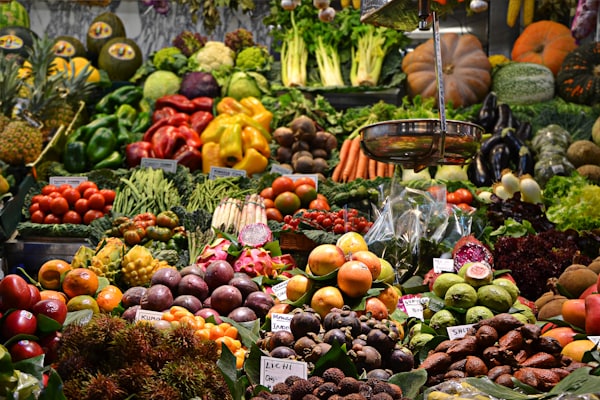
Harris Farm scored 87% for fresh produce quality — the highest of any Australian supermarket surveyed by CHOICE. Their buying team works directly with farmers, sourcing produce that's picked closer to peak ripeness than the logistics of a giant national chain allow. The stores feel more like an upmarket market than a supermarket, with loose produce, specialty cuts of meat, and a wide selection of artisan products.
Their Imperfect Picks range sells cosmetically imperfect fruit and vegetables at a significant discount — Harris Farm was one of the first Australian supermarkets to champion this concept. The range has become a staple for budget-conscious shoppers who prioritise quality over cosmetics.
Harris Farm is the most expensive of Australia's major supermarkets. A comparable basket of items will cost notably more than at Coles or Woolworths. However, repeat customers argue that the quality difference — particularly for fresh produce, specialty meats, and artisan products — justifies the premium. In Finder's 2025 awards, Harris Farm swept the emotional categories: Most Loved, Most Trusted, Most Recommended, and Top Rated Produce.
In a major 2026 move, Harris Farm partnered with Amazon to offer same-day delivery across 80+ Sydney suburbs — pitching itself against Coles and Woolworths' own rapid delivery services. This partnership marks a significant step in Harris Farm's growth beyond its physical footprint.
Last updated: 9 April 2026 · Applies to Australian users
AussieAisle ("we", "us", "our") is an independent Australian consumer information portal providing editorial reviews, comparisons, and general guidance about grocery retailers operating in Australia. We are not affiliated with, endorsed by, or sponsored by Woolworths Group, Coles Group, ALDI Australia, Metcash/IGA, Harris Farm Markets, or any other supermarket chain.
Our content is intended for informational purposes only and is directed at Australian consumers. We operate in compliance with the Australian Consumer Law (Schedule 2 of the Competition and Consumer Act 2010 (Cth)).
We make reasonable efforts to ensure that all information published on AussieAisle is accurate, up-to-date, and sourced from reputable references including CHOICE, the ACCC, and publicly available corporate data. However:
We disclaim any liability for decisions made in reliance on information published on this website.
All original editorial content on AussieAisle, including text, design, and layout, is the intellectual property of AussieAisle and is protected under the Copyright Act 1968 (Cth). Supermarket logos, brand names, and trademarks referenced on this site remain the property of their respective owners and are used for editorial identification purposes only under nominative fair use principles.
Our site may include links to third-party websites including retailer websites, consumer advocacy organisations (such as CHOICE), and government bodies (such as the ACCC). We have no control over the content or privacy practices of external sites and accept no responsibility for them.
AussieAisle does not accept paid placement, advertising, or sponsored content from any supermarket chain or food brand. Our editorial reviews are independent. We may earn affiliate commissions through third-party links at no cost to you — where this applies, it will be disclosed clearly.
To the maximum extent permitted by Australian law, AussieAisle is not liable for any loss or damage (including indirect, consequential, or economic loss) arising from your use of this website or reliance on its content. Nothing in these terms limits any right you may have under the Australian Consumer Law, including rights relating to consumer guarantees.
We collect and handle personal information in accordance with the Privacy Act 1988 (Cth) and the Australian Privacy Principles (APPs). Please refer to our Cookie Policy for information about how we use cookies and tracking technologies.
These Terms and Conditions are governed by the laws of New South Wales, Australia. Any disputes shall be subject to the exclusive jurisdiction of the courts of New South Wales.
We reserve the right to update these Terms and Conditions at any time. Changes will be posted on this page with an updated "Last updated" date. Continued use of the site after changes constitutes acceptance of the revised terms.
For questions about these Terms and Conditions, please contact us at: hello@aussieaisle.com.au